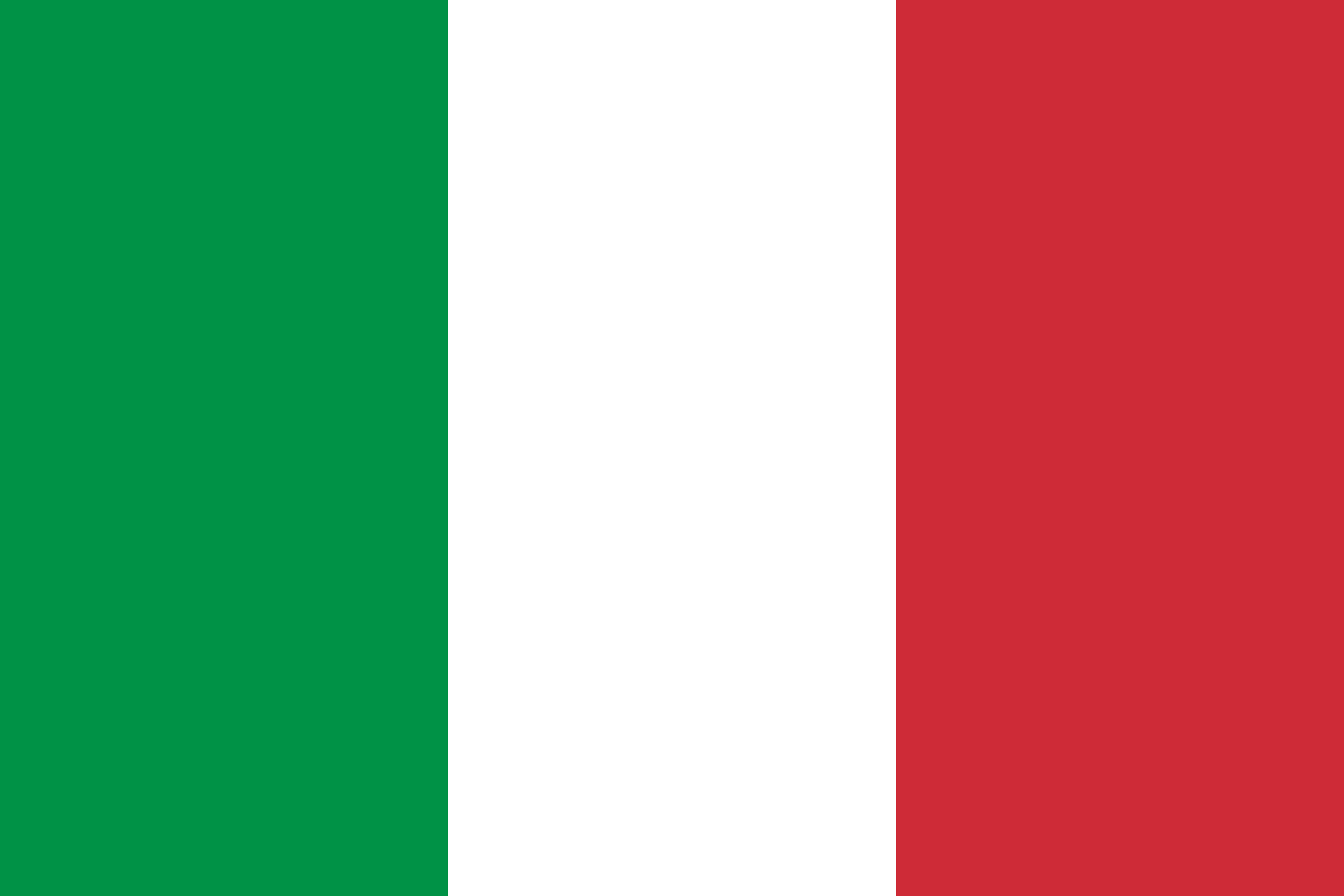
 Italy


Quick answerItaly is a country in Southern Europe, with a population of 58,934,336 (2026). Its capital is Rome, its official language is Italian, and its currency is the Euro (EUR). It covers 301,340 square kilometres (116,348 square miles), and its time zone is Europe/Rome.
Italy is a country in Southern Europe, home to about 59 million people. Its capital is Rome, its official language is Italian, and its currency is the euro.
Key facts
| Capital | Rome |
|---|---|
| Population | 58,934,336 (2026) · 58.9 million |
| Population density | 200.4 people per km² (land area) |
| Area | 301,340 km² (116,348 sq mi) total · 294,140 km² (113,568 sq mi) land |
| Official language | Italian (official) |
| Currency | Euro (EUR, €) |
| Time zone | Europe/Rome |
| Government | Unitary parliamentary republic |
| Coastline | 7,600 km |
| Highest point | Mont Blanc, 4,810 m |
| Life expectancy | 84 years (2024) |
| Calling code | +39 |
| Driving side | Right |
| Internet domain | .it |
Overview
Italy is a country in Southern and Western Europe, shaped like a boot reaching into the Mediterranean Sea. It consists of a long peninsula, the Alps on its northern land border, and nearly 800 islands, above all Sicily and Sardinia. Italy shares land borders with France to the west, Switzerland and Austria to the north and Slovenia to the east, and it encloses the two small states of San Marino and Vatican City. The Apennine Mountains run down the spine of the peninsula, and Mont Blanc, at 4,810 metres, is the highest point on the French-Italian border. Its coastline runs for 7,600 kilometres.
About 58.9 million people lived in Italy in 2026, making it the third most populous member state of the European Union. Rome, the capital, has about 2.7 million people, and Milan, Naples and Turin are the next largest cities. Venice, Florence, Bologna, Genoa and Palermo are among its other well-known cities. Italian is the official language, and life expectancy at birth was 84.0 years in 2024, among the highest in the world. About 70 per cent of Italians live in towns and cities.
Italy is a unitary parliamentary republic. Its history runs from the ancient Romans, who ruled the Mediterranean world from Rome, through the city-states and the Renaissance to the Kingdom of Italy, founded in 1861, and the Republic, founded in 1946. Rome was the seat of the Catholic Church for centuries, and the Vatican remains the world's smallest independent state. The economy, worth about $2.7 trillion in 2026 by IMF estimate, is one of the largest in the world, built on manufacturing, fashion, food and tourism. Italy has 62 UNESCO World Heritage Sites — more than any other country — from the Colosseum in Rome and the canals of Venice to the ruins of Pompeii.
Notable facts
- Italy has 62 UNESCO World Heritage Sites, more than any other country in the world.
- Rome, the capital, had 2,745,062 people in 2026, and its wider metropolitan city held about 4.2 million.
- Mont Blanc, at 4,810 metres on the French-Italian border, is the highest point in Italy.
- Italy had an estimated 58,934,336 people in 2026, making it the third most populous member state of the European Union.
- Life expectancy at birth in Italy was 84.0 years in 2024, according to the World Bank, among the highest in the world.
How Italy compares
Comparison table — Italy next to 3 similar countries (neighbours first, then the same subregion).
| Country | Population | Area | Density | Capital |
|---|---|---|---|---|
| Italy ★ | 58,934,336 (2026) | 301,340 km² | 200.4 people per km² | Rome |
| France | 68,720,337 (2025) | 551,695 km² | 126.3 people per km² | Paris |
| Spain | 49,801,559 (2026) | 505,992 km² | 99.8 people per km² | Madrid |
| Australia | 27,801,023 (2025) | 7,692,024 km² | 3.6 people per km² | Canberra |
Cities in Italy
- Rome 2,745,062 people (2026) · Capital Known for Colosseum
- Milan 1,362,863 people (2026) Known for Duomo
- Naples 905,050 people (2026) Known for Pizza
- Turin 855,654 people (2026) Known for Mole Antonelliana
Frequently asked questions
What is the capital of Italy?
The capital of Italy is Rome. It is also the country's largest city, with 2,745,062 people inside the city limits and about 4.2 million in the wider metropolitan city (2026). Rome sits on the River Tiber in central Italy and is home to the Colosseum, the Roman Forum and the Pantheon.
What is the population of Italy?
Italy had an estimated population of 58,934,336 in 2026. That makes it the third most populous member state of the European Union, behind Germany and France. Most Italians live in towns and cities, above all around Rome, Milan and Naples.
What language is spoken in Italy?
Italian is the official language of Italy and is spoken by almost everyone in the country. It is the language of government, schools and the media. Several regional languages are also spoken, including Neapolitan, Sicilian, Venetian and Sardinian, and German is co-official in South Tyrol.
What currency is used in Italy?
Italy uses the euro (EUR, symbol €). Italy adopted the euro in 1999 for electronic payments and in 2002 for cash, replacing the Italian lira. The euro is shared by 20 European Union countries, so the same currency works across much of Europe.
Where is Italy?
Italy is in Southern Europe, a boot-shaped peninsula reaching into the Mediterranean Sea, with the Alps on its northern border. It borders France, Switzerland, Austria and Slovenia, and encloses San Marino and Vatican City. Sicily and Sardinia are its largest islands.
What time zone is Italy in?
Italy uses Central European Time (CET, UTC+1) in winter and Central European Summer Time (CEST, UTC+2) from the last Sunday in March to the last Sunday in October. The IANA time zone name is Europe/Rome. Italy is one hour ahead of London in winter and on the same time as Paris and Berlin.
Quick quiz
Three questions from the facts on this page. No sign-up, no score is saved.
Keep exploring
- Rome — capital of Italy
- Milan — city in Italy
- Naples — city in Italy
- Turin — city in Italy
- Austria — neighbouring country (page coming soon)
- France — neighbouring country
- San-marino — neighbouring country (page coming soon)
- Slovenia — neighbouring country (page coming soon)
- Switzerland — neighbouring country (page coming soon)
- Vatican-city — neighbouring country (page coming soon)
- Spain — another country in Southern Europe
- All countries — the full list
Sources & last updated
- Wikipedia — Italy
- CIA World Factbook — Italy (archive mirror)
- World Bank, World Development Indicators
- mledoze/countries (skeleton: area, borders, capital, languages, currency, demonym, calling code, landlocked, coordinates, region, tld)
- UNESCO — Italy
Last updated: . Figures are shown with their year; where sources disagree, the value is left out rather than estimated.