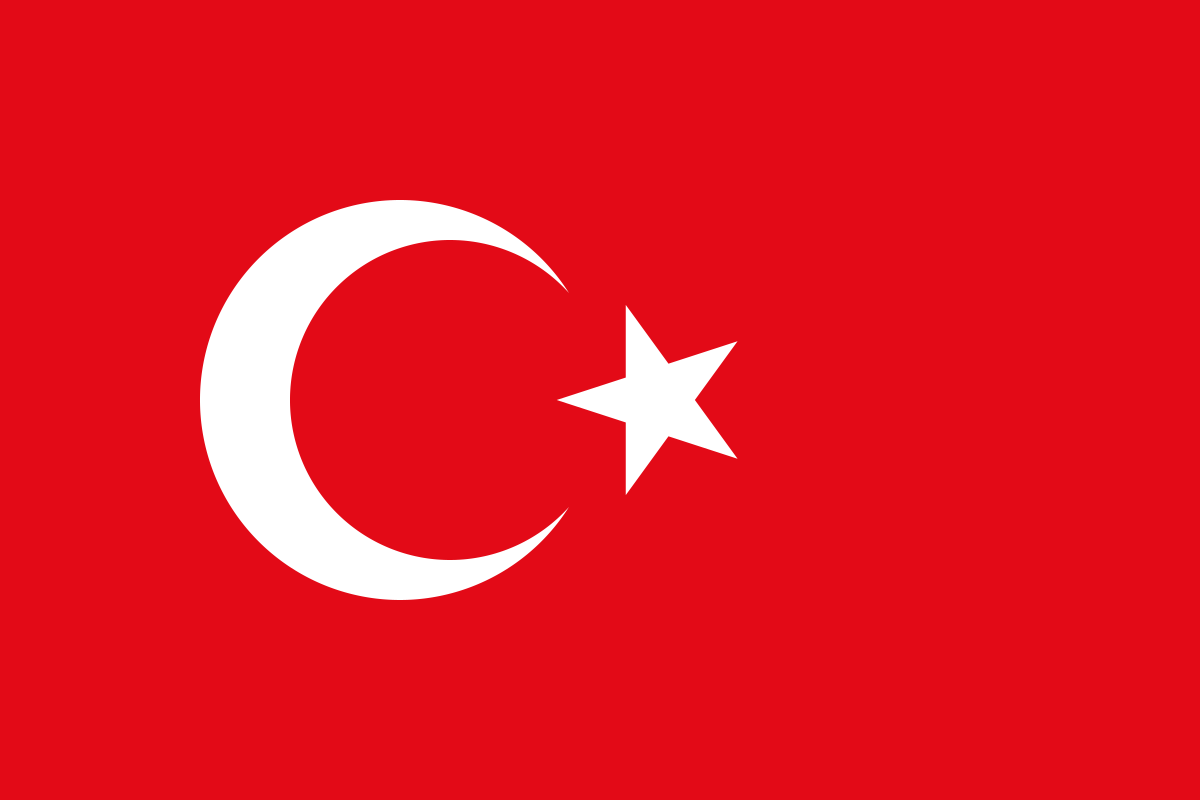
 Turkey


Quick answerTurkey is a country in Western Asia, with a population of 86,092,168 (2025). Its capital is Ankara, its official language is Turkish, and its currency is the Turkish lira (TRY). It covers 783,562 square kilometres (302,535 square miles), and its time zone is Europe/Istanbul.
Turkey is a transcontinental country where Europe meets Asia, home to about 86 million people. Its capital is Ankara, its largest city is Istanbul, its official language is Turkish, and its currency is the lira.
Key facts
| Capital | Ankara |
|---|---|
| Population | 86,092,168 (2025) · 86.1 million |
| Population density | 111.9 people per km² (land area) |
| Area | 783,562 km² (302,535 sq mi) total · 769,632 km² (297,156 sq mi) land |
| Official language | Turkish (official) |
| Currency | Turkish lira (TRY, ₺) |
| Time zone | Europe/Istanbul |
| Government | Unitary presidential republic |
| Coastline | 7,200 km |
| Highest point | Mount Ararat, 5,137 m |
| Life expectancy | 77.4 years (2024) |
| Calling code | +90 |
| Driving side | Right |
| Internet domain | .tr |
Overview
Turkey is a transcontinental country, with most of its land in Anatolia in Western Asia and a smaller part, East Thrace, in South-Eastern Europe. Anatolia covers 755,688 square kilometres, about 97 per cent of the country, while East Thrace covers 23,764 square kilometres, about 3 per cent. The two parts are separated by the Bosphorus, the Sea of Marmara and the Dardanelles. Turkey borders eight countries — Greece and Bulgaria to the west, Georgia, Armenia, Azerbaijan and Iran to the east, and Iraq and Syria to the south — and faces the Black Sea, the Aegean Sea and the Mediterranean. Mount Ararat, at 5,137 metres, is its highest point.
About 86.1 million people lived in Turkey in 2025, and about 89 per cent of them live in towns and cities. Ankara, the capital since 1923, has about 5.9 million people, while Istanbul, the largest city, has about 15.8 million and straddles the Bosphorus between Europe and Asia. Other major cities include Izmir, Bursa and Antalya. The country sits on active fault lines and is prone to earthquakes, a fact that shapes its building codes and its cities. Turkish is the official language, and Kurdish is the most widely spoken minority language. Life expectancy at birth was 77.4 years in 2024.
Turkey is a unitary presidential republic. Its lands were home to the Hittites, Greeks, Romans and Byzantines before the Seljuk and Ottoman Turks, whose empire ruled from Constantinople — now Istanbul — for centuries after 1453. The Republic was proclaimed in 1923 under Mustafa Kemal Atatürk. The economy, worth about $1.8 trillion in 2026 by IMF estimate, is the world's sixteenth largest in nominal terms, built on manufacturing, agriculture, construction and tourism. Turkey has 22 UNESCO World Heritage Sites, including Göbekli Tepe, a temple complex close to 12,000 years old, and is famous for its cuisine, bazaars and Mediterranean and Aegean coasts.
Notable facts
- Istanbul is Turkey's largest city, with 15,754,053 people at the end of 2025, and it straddles the Bosphorus between Europe and Asia.
- Turkey had an estimated 86,092,168 people in December 2025, according to TurkStat.
- Mount Ararat, at 5,137 metres, is the highest point in Turkey.
- Turkey has 22 UNESCO World Heritage Sites, including Göbekli Tepe, a temple complex close to 12,000 years old.
- Ankara has been Turkey's capital since 1923, when the Republic was proclaimed under Mustafa Kemal Atatürk.
How Turkey compares
Comparison table — Turkey next to 3 similar countries (neighbours first, then the same subregion).
| Country | Population | Area | Density | Capital |
|---|---|---|---|---|
| Turkey ★ | 86,092,168 (2025) | 783,562 km² | 111.9 people per km² | Ankara |
| Australia | 27,801,023 (2025) | 7,692,024 km² | 3.6 people per km² | Canberra |
| Brazil | 213,421,037 (2025) | 8,515,767 km² | 25.2 people per km² | Brasília |
| Canada | 41,798,407 (2026) | 9,984,670 km² | 4.6 people per km² | Ottawa |
Cities in Turkey
- Istanbul 15,754,053 people (2025) Known for Hagia Sophia
- Ankara 5,910,320 people (2025) · Capital Known for Anıtkabir
- Izmir 4,504,184 people (2025) Known for Clock Tower
- Bursa 2,051,464 people (2022) Known for First Ottoman capital
Frequently asked questions
What is the capital of Turkey?
The capital of Turkey is Ankara. It has been the capital since 1923, when the Republic was proclaimed, and it has about 5.9 million people (2025). Ankara sits on the Central Anatolian plateau and is home to Anıtkabir, the mausoleum of Mustafa Kemal Atatürk, and the Museum of Anatolian Civilizations.
What is the population of Turkey?
Turkey had an estimated population of 86,092,168 in December 2025, according to TurkStat. That makes it the 18th most populous country in the world. About 89 per cent of Turks live in towns and cities, above all in Istanbul, Ankara and Izmir.
What language is spoken in Turkey?
Turkish is the official language of Turkey and is spoken by almost everyone in the country. It is the language of government, schools and the media. Kurdish is the most widely spoken minority language, and other languages include Arabic, Zaza, Circassian and Laz.
What currency is used in Turkey?
Turkey uses the Turkish lira (TRY, symbol ₺). The lira is divided into 100 kuruş. Cash and cards are both widely used, and prices in tourist areas are sometimes also shown in euros or US dollars. Cards are accepted in most hotels, restaurants and shops in the big cities.
Where is Turkey?
Turkey is mainly in Anatolia in Western Asia, with a smaller part, East Thrace, in South-Eastern Europe. It borders Greece and Bulgaria to the west, Georgia, Armenia, Azerbaijan and Iran to the east, and Iraq and Syria to the south, with seas on three sides.
What time zone is Turkey in?
Turkey uses Turkey Time (TRT, UTC+3) all year round and does not observe daylight saving time. The IANA time zone name is Europe/Istanbul. Turkish time is three hours ahead of Coordinated Universal Time, so noon in London in winter is 3 p.m. in Istanbul.
Quick quiz
Three questions from the facts on this page. No sign-up, no score is saved.
Keep exploring
- Istanbul — city in Turkey
- Ankara — capital of Turkey
- Izmir — city in Turkey
- Bursa — city in Turkey
- Armenia — neighbouring country (page coming soon)
- Azerbaijan — neighbouring country (page coming soon)
- Bulgaria — neighbouring country (page coming soon)
- Georgia — neighbouring country (page coming soon)
- Greece — neighbouring country (page coming soon)
- Iran — neighbouring country (page coming soon)
- Iraq — neighbouring country (page coming soon)
- Syria — neighbouring country (page coming soon)
- All countries — the full list
Sources & last updated
- Wikipedia — Turkey
- Wikipedia — East Thrace
- CIA World Factbook — Turkey (archive mirror)
- World Bank, World Development Indicators
- mledoze/countries (skeleton: area, borders, capital, languages, currency, demonym, calling code, landlocked, coordinates, region, tld)
- UNESCO — Turkey
Last updated: . Figures are shown with their year; where sources disagree, the value is left out rather than estimated.