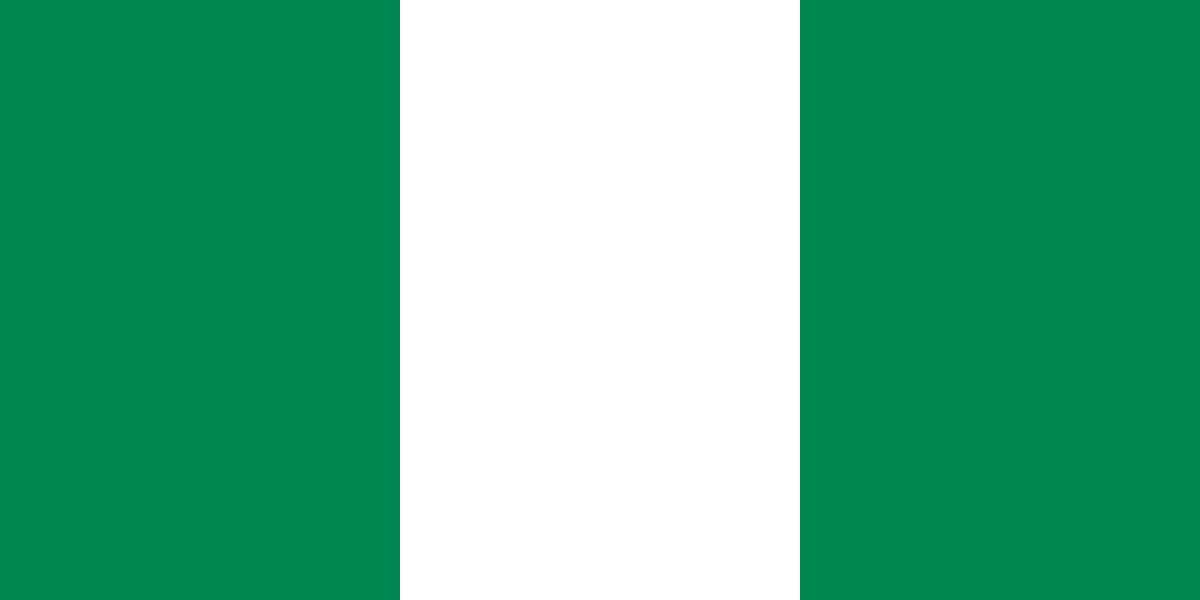
 Nigeria


Quick answerNigeria is a country in Western Africa, with a population of 237,527,782 (2025). Its capital is Abuja, its official language is English, and its currency is the Nigerian naira (NGN). It covers 923,769 square kilometres (356,669 square miles), and its time zone is Africa/Lagos.
Nigeria is the most populous country in Africa, home to about 238 million people in West Africa on the Gulf of Guinea. Its capital is Abuja, its official language is English, and its currency is the naira.
Key facts
| Capital | Abuja |
|---|---|
| Population | 237,527,782 (2025) · 237.5 million |
| Population density | 260.8 people per km² (land area) |
| Area | 923,769 km² (356,669 sq mi) total · 910,768 km² (351,649 sq mi) land |
| Official languages | English (official), Hausa, Igbo, Yoruba |
| Currency | Nigerian naira (NGN, ₦) |
| Time zone | Africa/Lagos |
| Government | Federal presidential republic |
| Coastline | 853 km |
| Highest point | Chappal Waddi, 2,419 m |
| Life expectancy | 54.6 years (2024) |
| Calling code | +234 |
| Driving side | Right |
| Internet domain | .ng |
Overview
Nigeria sits in West Africa on the Gulf of Guinea, between the Sahel to the north and the Atlantic Ocean to the south. It covers 923,769 square kilometres, with Niger to the north, Chad to the north-east, Cameroon to the east and Benin to the west, and 853 kilometres of coastline along the south. The Niger River, West Africa's great river, flows through the country and meets its main tributary, the Benue, at Lokoja before reaching the sea through the Niger Delta. The highest point is Chappal Waddi, at 2,419 metres on the border with Cameroon, and the Jos Plateau rises in the centre of the country.
About 237.5 million people lived in Nigeria in 2025, making it Africa's most populous country and the sixth-most populous in the world. Around 64 per cent of Nigerians live in towns and cities, and the median age is just 17.9 years, so Nigeria has one of the youngest populations on Earth. More than 250 ethnic groups share the country and speak over 500 languages; the largest groups are the Hausa in the north, the Yoruba in the south-west and the Igbo in the south-east. English is the official language, and life expectancy at birth was 54.6 years in 2024.
Nigeria is a federal presidential republic of 36 states and a Federal Capital Territory. It became independent from Britain on 1 October 1960, and in 1991 the capital moved from Lagos to the planned city of Abuja, built at the country's geographic centre. Lagos remains the biggest city, with about 21 million people in its metropolitan area, and it is the commercial heart of the country. Nigeria is Africa's largest oil producer and a member of OPEC, and its film industry, Nollywood, is the world's second-largest by number of films, after India's Bollywood.
Nigeria's best-known sights include Zuma Rock, the huge igneous outcrop beside the road to Abuja, and the Osun-Osogbo Sacred Grove and the Sukur Cultural Landscape, both UNESCO World Heritage sites, as well as Yankari National Park, home to elephants and warm springs. The country's music, from Afrobeats stars to highlife, is heard around the world, and its writers, including Nobel laureate Wole Soyinka, are among Africa's most celebrated.
Notable facts
- Nigeria had 237,527,782 people in 2025, making it the most populous country in Africa and the sixth-most populous in the world.
- More than 250 ethnic groups live in Nigeria and speak over 500 languages; the largest groups are the Hausa, Yoruba and Igbo.
- Abuja replaced Lagos as Nigeria's capital on 12 December 1991; Lagos remains the country's largest city.
- Nollywood, Nigeria's film industry, is the world's second-largest film producer by number of titles, after India's Bollywood.
- Nigeria is Africa's largest oil producer and a member of OPEC; its first commercial oil discovery was at Oloibiri in 1956.
How Nigeria compares
Comparison table — Nigeria next to 3 similar countries (neighbours first, then the same subregion).
| Country | Population | Area | Density | Capital |
|---|---|---|---|---|
| Nigeria ★ | 237,527,782 (2025) | 923,769 km² | 260.8 people per km² | Abuja |
| Algeria | 47,435,312 (2025) | 2,381,741 km² | 19.9 people per km² | Algiers |
| Australia | 27,801,023 (2025) | 7,692,024 km² | 3.6 people per km² | Canberra |
| Bangladesh | 179,300,000 (2026) | 148,460 km² | 1377.4 people per km² | Dhaka |
Cities in Nigeria
- Lagos Known for Lekki-Ikoyi Link Bridge
- Kano Known for Ancient city walls
- Ibadan Known for Cocoa House
- Abuja Known for Aso Rock
Frequently asked questions
What is the capital of Nigeria?
The capital of Nigeria is Abuja. It is a planned city built in the centre of the country, and it replaced Lagos as the seat of government on 12 December 1991. Abuja had about 2.1 million people in 2026 and is home to the National Assembly, the Supreme Court and the presidential villa, Aso Rock.
What is the population of Nigeria?
Nigeria had 237,527,782 people in 2025, according to the World Bank, making it the most populous country in Africa and the sixth-most populous in the world. About 64 per cent of Nigerians live in towns and cities, and the median age is just 17.9 years, one of the youngest populations anywhere.
What language is spoken in Nigeria?
English is the official language of Nigeria and the language of government, schools and business. More than 500 other languages are spoken across the country, and Hausa, Yoruba and Igbo are recognised as the three major indigenous languages, each spoken by tens of millions of people.
What currency is used in Nigeria?
Nigeria uses the naira (NGN, symbol ₦). Banknotes come in denominations up to 1,000 naira, and cash is still widely used in markets and small shops. Cards and mobile payments work in hotels, restaurants and larger stores in the cities, but carry cash outside them.
Where is Nigeria?
Nigeria is in West Africa, on the Gulf of Guinea on the Atlantic coast. It borders Niger to the north, Chad to the north-east, Cameroon to the east and Benin to the west. The country covers 923,769 square kilometres, and the Niger and Benue rivers meet at Lokoja in the centre.
What time zone is Nigeria in?
Nigeria uses a single time zone, West Africa Time (UTC+1), across the whole country. The IANA time zone name is Africa/Lagos. There is no daylight saving time, so the clocks stay the same all year, from Lagos on the coast to Kano in the north.
Quick quiz
Three questions from the facts on this page. No sign-up, no score is saved.
Keep exploring
- Lagos — city in Nigeria
- Kano — city in Nigeria
- Ibadan — city in Nigeria
- Abuja — capital of Nigeria
- Benin — neighbouring country (page coming soon)
- Cameroon — neighbouring country (page coming soon)
- Chad — neighbouring country (page coming soon)
- Niger — neighbouring country (page coming soon)
- All countries — the full list
Sources & last updated
- Wikipedia — Nigeria
- World Bank, World Development Indicators
- Wikipedia — List of countries and dependencies by length of coastline
- Wikipedia — List of countries and dependencies by area
- Wikipedia — List of highest points of African countries
Last updated: . Figures are shown with their year; where sources disagree, the value is left out rather than estimated.