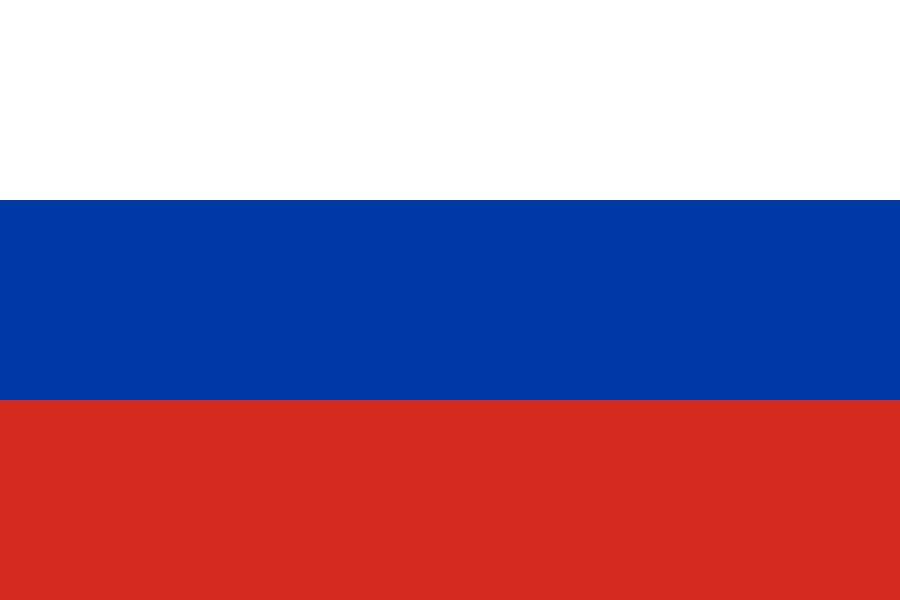
 Russia


Quick answerRussia is a country in Eastern Europe, with a population of 146,028,325 (2025). Its capital is Moscow, its official language is Russian, and its currency is the Russian ruble (RUB). It covers 17,098,246 square kilometres (6,601,667 square miles), and its time zone is Europe/Kaliningrad.
Russia is the largest country in the world, home to about 146 million people. Its capital is Moscow, its official language is Russian, and its currency is the ruble.
Key facts
| Capital | Moscow |
|---|---|
| Population | 146,028,325 (2025) · 146.0 million |
| Population density | 8.9 people per km² (land area) |
| Area | 17,098,246 km² (6,601,667 sq mi) total · 16,377,742 km² (6,323,479 sq mi) land |
| Official language | Russian (official) |
| Currency | Russian ruble (RUB, ₽) |
| Time zones | Europe/Kaliningrad, Europe/Moscow, Europe/Samara, Asia/Yekaterinburg, Asia/Omsk, Asia/Novosibirsk, Asia/Irkutsk, Asia/Yakutsk, Asia/Vladivostok, Asia/Magadan, Asia/Kamchatka |
| Government | Federal semi-presidential republic |
| Coastline | 37,653 km |
| Highest point | Mount Elbrus, 5,642 m |
| Life expectancy | 73.4 years (2024) |
| Calling code | +7 |
| Driving side | Right |
| Internet domain | .ru |
Overview
Russia is the largest country in the world, covering 17,098,246 square kilometres across Eastern Europe and North Asia — roughly one-eighth of the world's inhabited land. It spans eleven time zones, from the Baltic Sea in the west to the Pacific Ocean in the east, and shares land borders with fourteen countries, tied with China for the most of any country. Its landscapes run from the forests and plains of European Russia to the Ural Mountains, the Siberian taiga and tundra, and the volcanoes of Kamchatka in the far east. Mount Elbrus, at 5,642 metres, is the highest point in Europe, and Lake Baikal in Siberia, 1,642 metres deep, is the world's deepest lake.
About 146 million people lived in Russia in 2025, making it the most populous country in Europe and the ninth most populous in the world. Around three-quarters of Russians live in towns and cities. Moscow, the capital, anchors a metropolitan area of about 21.5 million people, the largest in Europe, while Saint Petersburg, the second city, holds about 5.6 million. Russian is the official language, and life expectancy at birth was 73.4 years in 2024. The Trans-Siberian Railway, the world's longest at 9,289 kilometres, links Moscow with Vladivostok on the Pacific.
Russia is a federal semi-presidential republic. Its history runs from Kievan Rus' in the ninth century through the Russian Empire and the Soviet Union to the Russian Federation, formed in 1991. The economy, worth about $2.9 trillion in 2026 by IMF estimate, rests on vast oil and gas reserves, alongside mining, manufacturing and agriculture. Russian culture is known worldwide for its literature, ballet and classical music, and the country launched the first satellite in 1957 and sent the first human into space in 1961. Russia has 32 UNESCO World Heritage Sites, from the Kremlin and Red Square in Moscow to the historic centre of Saint Petersburg. The country stretches so far east that when it is noon in Moscow, it is already evening in Vladivostok.
Notable facts
- Russia covers 17,098,246 square kilometres, making it the largest country in the world — about one-eighth of the world's inhabited land.
- Russia shares land borders with fourteen countries, tied with China for the most of any country in the world.
- Mount Elbrus, at 5,642 metres, is the highest point in Russia and in Europe.
- Russia had an estimated 146,028,325 people in 2025, according to Rosstat, making it the most populous country in Europe.
- Russia has 32 UNESCO World Heritage Sites, including the Kremlin and Red Square in Moscow and the historic centre of Saint Petersburg.
How Russia compares
Comparison table — Russia next to 3 similar countries (neighbours first, then the same subregion).
| Country | Population | Area | Density | Capital |
|---|---|---|---|---|
| Russia ★ | 146,028,325 (2025) | 17,098,246 km² | 8.9 people per km² | Moscow |
| China | 1,404,890,000 (2025) | 9,596,961 km² | 150.6 people per km² | Beijing |
| Norway | 5,633,770 (2026) | 323,802 km² | 18.5 people per km² | Oslo |
| Australia | 27,801,023 (2025) | 7,692,024 km² | 3.6 people per km² | Canberra |
Cities in Russia
- Moscow 13,010,112 people (2021) · Capital Known for Kremlin
- Saint Petersburg 5,601,911 people (2021) Known for Hermitage Museum
- Novosibirsk 1,633,595 people (2021) Known for Trans-Siberian Railway
- Yekaterinburg 1,536,183 people (2024) Known for Church on the Blood
Frequently asked questions
What is the capital of Russia?
The capital of Russia is Moscow. It is also the country's largest city, with 13,010,112 people inside the city limits and about 21.5 million in the wider metropolitan area (2021 Census). Moscow sits on the Moskva River in western Russia and is home to the Kremlin, Red Square and Saint Basil's Cathedral.
What is the population of Russia?
Russia had an estimated population of 146,028,325 in 2025, according to Rosstat, including Crimea. That makes it the most populous country in Europe and the ninth most populous in the world. About three-quarters of Russians live in towns and cities, above all in Moscow and Saint Petersburg.
What language is spoken in Russia?
Russian is the official language of Russia and is spoken by almost everyone in the country. It is the language of government, schools and the media. Dozens of other languages are official in Russia's republics and regions, including Tatar, Chechen and Bashkir, and many Russians also speak English in the big cities.
What currency is used in Russia?
Russia uses the Russian ruble (RUB, symbol ₽), divided into 100 kopecks. Banknotes and coins come in many denominations, and card payments are common in cities, though visitors should carry cash as well, since foreign-issued cards often do not work.
Where is Russia?
Russia is in Eastern Europe and North Asia, stretching from the Baltic Sea in the west to the Pacific Ocean in the east. It borders fourteen countries, including China, Kazakhstan, Ukraine, Finland and Norway, and faces the Arctic Ocean in the north and the Pacific in the east.
What time zone is Russia in?
Russia spans eleven time zones, from UTC+2 in Kaliningrad to UTC+12 in Kamchatka. Moscow uses Moscow Time (MSK, UTC+3) all year round, as Russia does not observe daylight saving time. The IANA time zone name for the capital is Europe/Moscow.
Quick quiz
Three questions from the facts on this page. No sign-up, no score is saved.
Keep exploring
- Moscow — capital of Russia
- Saint Petersburg — city in Russia
- Novosibirsk — city in Russia
- Yekaterinburg — city in Russia
- Azerbaijan — neighbouring country (page coming soon)
- Belarus — neighbouring country (page coming soon)
- China — neighbouring country
- Estonia — neighbouring country (page coming soon)
- Finland — neighbouring country (page coming soon)
- Georgia — neighbouring country (page coming soon)
- Kazakhstan — neighbouring country (page coming soon)
- Latvia — neighbouring country (page coming soon)
- Lithuania — neighbouring country (page coming soon)
- Mongolia — neighbouring country (page coming soon)
- North-korea — neighbouring country (page coming soon)
- Norway — neighbouring country
- Poland — neighbouring country (page coming soon)
- Ukraine — neighbouring country (page coming soon)
- All countries — the full list
Sources & last updated
- Wikipedia — Russia
- CIA World Factbook — Russia (archive mirror)
- World Bank, World Development Indicators
- mledoze/countries (skeleton: area, borders, capital, languages, currency, demonym, calling code, landlocked, coordinates, region, tld)
- UNESCO — Russia
- Wikipedia — Lake Baikal
- Wikipedia — Trans-Siberian Railway
Last updated: . Figures are shown with their year; where sources disagree, the value is left out rather than estimated.