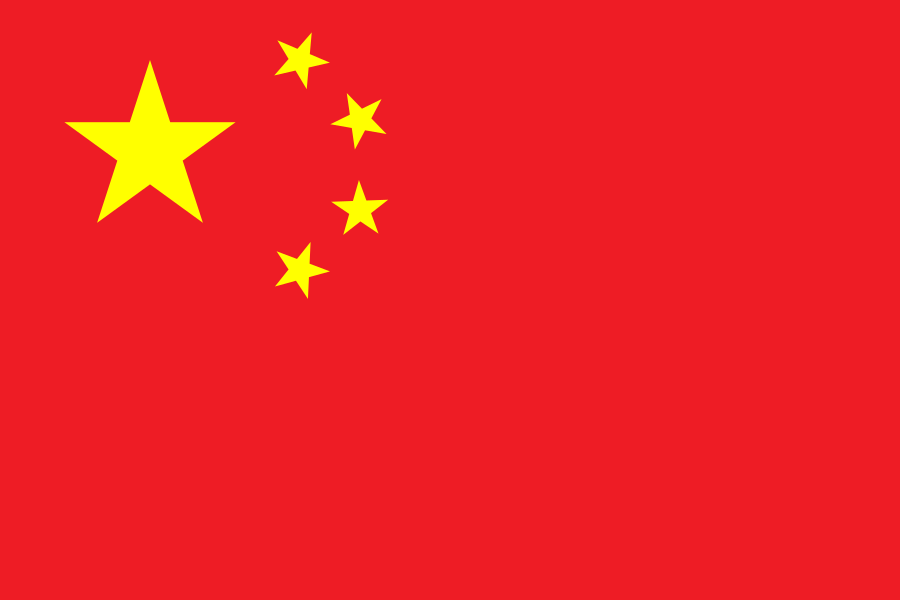
 China


Quick answerChina is a country in Eastern Asia, with a population of 1,404,890,000 (2025). Its capital is Beijing, its official language is Chinese, and its currency is the Chinese yuan (CNY). It covers 9,596,961 square kilometres (3,705,406 square miles), and its time zone is Asia/Shanghai.
China is the world's second-most populous country, home to about 1.4 billion people. Its capital is Beijing, its official language is Chinese, and its currency is the yuan.
Key facts
| Capital | Beijing |
|---|---|
| Population | 1,404,890,000 (2025) · 1404.9 million |
| Population density | 150.6 people per km² (land area) |
| Area | 9,596,961 km² (3,705,406 sq mi) total · 9,326,410 km² (3,600,946 sq mi) land |
| Official language | Chinese (official) |
| Currency | Chinese yuan (CNY, ¥) |
| Time zone | Asia/Shanghai |
| Government | Unitary communist state |
| Coastline | 14,500 km |
| Highest point | Mount Everest, 8,849 m |
| Life expectancy | 78 years (2024) |
| Calling code | +86 |
| Driving side | Right |
| Internet domain | .cn |
Overview
China sits in East Asia, between the Pacific Ocean to the east and the high mountains and deserts of Central Asia to the west. It covers 9,596,961 square kilometres, making it the third-largest country in the world by area, and it shares land borders with 14 countries. Its landscapes range from the tropical south to the deserts of the north-west and the Tibetan Plateau in the west, where Mount Everest rises to 8,849 metres on the border with Nepal. China has about 14,500 kilometres of coastline along the Pacific, and two of Asia's great rivers, the Yangtze and the Yellow River, run across it from west to east.
About 1.4 billion people lived in China in 2025, making it the second-most populous country in the world after India. Around 66 per cent of them live in towns and cities, and the largest urban areas are Shanghai, Beijing and the Pearl River Delta around Guangzhou and Shenzhen. Chinese is the official language, written in characters that have been used for more than 3,000 years, and life expectancy at birth reached 78.0 years in 2024. Most Chinese people live in the eastern half of the country, where the great river valleys and coastal plains hold the big cities, while the west remains sparsely populated.
China is a unitary communist state led by the Communist Party of China, which has ruled since 1949. The country opened its economy to the world in 1978, and in a few decades it became the world's largest manufacturer and its second-largest economy. China has 60 UNESCO World Heritage sites, including the Great Wall, the Forbidden City in Beijing and the Terracotta Army near Xi'an, and its inventions — paper, printing, gunpowder and the compass — shaped the world long before the modern era. Today it is also a major centre of science and technology, from high-speed rail to space flight, and its food, from Sichuan spice to Cantonese dim sum, is known everywhere.
Notable facts
- China's population was 1,404,890,000 in 2025, making it the second-most populous country in the world after India.
- China covers 9,596,961 square kilometres, making it the third-largest country in the world by area.
- China has 60 UNESCO World Heritage sites, including the Great Wall, the Forbidden City and the Terracotta Army.
- Mount Everest, at 8,849 metres, is the highest point on Earth and stands on China's border with Nepal.
- Life expectancy at birth in China was 78.0 years in 2024, according to the World Bank.
How China compares
Comparison table — China next to 3 similar countries (neighbours first, then the same subregion).
| Country | Population | Area | Density | Capital |
|---|---|---|---|---|
| China ★ | 1,404,890,000 (2025) | 9,596,961 km² | 150.6 people per km² | Beijing |
| India | 1,464,000,000 (2025) | 3,287,263 km² | 492.4 people per km² | New Delhi |
| Russia | 146,028,325 (2025) | 17,098,246 km² | 8.9 people per km² | Moscow |
| Vietnam | 102,300,000 (2025) | 331,345 km² | 329.9 people per km² | Hanoi |
Cities in China
- Shanghai 24,874,500 people (2023) Known for The Bund
- Beijing 21,893,095 people (2020) · Capital Known for Forbidden City
- Guangzhou 18,676,605 people (2020) Known for Canton Fair
- Shenzhen 17,560,000 people (2020) Known for China's Silicon Valley
Frequently asked questions
What is the capital of China?
The capital of China is Beijing. It is the country's second-largest city, with about 21.9 million people in the municipality (2020 census) and about 22.4 million in the metropolitan area. Beijing sits in northern China and is home to the Forbidden City, the Temple of Heaven and the Summer Palace, as well as Tiananmen Square.
What is the population of China?
China had a population of 1,404,890,000 in 2025, according to the national estimate, making it the second-most populous country in the world after India. About 66 per cent of Chinese people live in towns and cities, with the largest urban areas around Shanghai, Beijing and Guangzhou.
What language is spoken in China?
Chinese is the official language of China, and Standard Chinese (Mandarin) is the language of government, schools and the media. It is written with Chinese characters, which have been used for more than 3,000 years. Many people also speak regional varieties such as Cantonese, Shanghainese and Hokkien in daily life.
What currency is used in China?
China uses the yuan (CNY, symbol ¥), officially called the renminbi, which means 'the people's currency'. Cash is now rare in the cities, where most people pay with mobile phone apps such as WeChat Pay and Alipay. Banknotes come in denominations up to 100 yuan, and coins are used for small amounts.
Where is China?
China is in East Asia, on the western shore of the Pacific Ocean. It borders Russia and Mongolia to the north, Kazakhstan, Kyrgyzstan and Tajikistan to the west, Afghanistan, Pakistan, India, Nepal and Bhutan to the south-west, and Myanmar, Laos and Vietnam to the south. North Korea lies to the north-east, across the Yalu River.
What time zone is China in?
China uses a single time zone, China Standard Time (CST, UTC+8), across the whole country, even though the country spans five geographical time zones. The IANA time zone name is Asia/Shanghai. There is no daylight saving time, so the clocks stay the same all year, from Beijing in the east to Xinjiang in the west.
Quick quiz
Three questions from the facts on this page. No sign-up, no score is saved.
Keep exploring
- Shanghai — city in China
- Beijing — capital of China
- Guangzhou — city in China
- Shenzhen — city in China
- Afghanistan — neighbouring country (page coming soon)
- Bhutan — neighbouring country (page coming soon)
- India — neighbouring country
- Kazakhstan — neighbouring country (page coming soon)
- Kyrgyzstan — neighbouring country (page coming soon)
- Laos — neighbouring country (page coming soon)
- Mongolia — neighbouring country (page coming soon)
- Myanmar — neighbouring country (page coming soon)
- Nepal — neighbouring country (page coming soon)
- North-korea — neighbouring country (page coming soon)
- Pakistan — neighbouring country (page coming soon)
- Russia — neighbouring country
- Tajikistan — neighbouring country (page coming soon)
- Vietnam — neighbouring country
- Japan — another country in Eastern Asia
- South Korea — another country in Eastern Asia
- All countries — the full list
Sources & last updated
- Wikipedia — China
- World Bank, World Development Indicators
- mledoze/countries (skeleton: area, borders, capital, languages, currency, demonym, calling code, landlocked, coordinates, region, tld)
- Wikipedia — List of countries and dependencies by length of coastline
- CIA World Factbook — China (via The World Factbook)
Last updated: . Figures are shown with their year; where sources disagree, the value is left out rather than estimated.