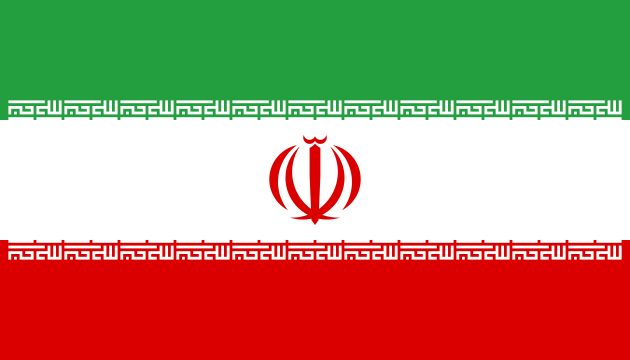
 Iran


Quick answerIran is a country in Southern Asia, with a population of 92,417,681 (2025). Its capital is Tehran, its official language is Persian, and its currency is the Iranian rial (IRR). It covers 1,648,195 square kilometres (636,371 square miles), and its time zone is Asia/Tehran.
Iran is a country in West Asia, home to about 92 million people. Its capital and largest city is Tehran, its official language is Persian, and its currency is the rial.
Key facts
| Capital | Tehran |
|---|---|
| Population | 92,417,681 (2025) · 92.4 million |
| Population density | 56.7 people per km² (land area) |
| Area | 1,648,195 km² (636,371 sq mi) total · 1,628,550 km² (628,786 sq mi) land |
| Official language | Persian (official) |
| Currency | Iranian rial (IRR, ﷼) |
| Time zone | Asia/Tehran |
| Government | Unitary theocratic Islamic republic |
| Coastline | 2,440 km |
| Highest point | Mount Damavand, 5,610 m |
| Life expectancy | 77.7 years (2023) |
| Calling code | +98 |
| Driving side | Right |
| Internet domain | .ir |
Overview
Iran sits in West Asia, between the Caspian Sea to the north and the Persian Gulf and the Gulf of Oman to the south. It covers 1,648,195 square kilometres, making it the 17th-largest country in the world, and its 2,440 kilometres of coastline run along the Persian Gulf and the Gulf of Oman, with another 740 kilometres on the Caspian Sea. Iran is one of the world's most mountainous countries, dominated by the Zagros range in the west and the Alborz in the north, where Mount Damavand rises to 5,610 metres, the highest volcano in Asia.
About 92.4 million people lived in Iran in 2025, making it the 17th-most populous country in the world. Around 77 per cent of Iranians live in towns and cities, above all in Tehran, the capital, with around 9 million people in the city and about 16.8 million in the metropolitan area. Persian is the official language, and life expectancy at birth was 77.7 years in 2023. The median age is 33.8 years.
Iran is home to one of the world's oldest continuous civilisations, first unified under the Medes in the 7th century BCE and at its height under Cyrus the Great, who founded the Achaemenid Empire in the 6th century BCE. The country was later ruled by the Parthians, the Sasanians, the Safavids and the Qajars, and it became an Islamic republic after the revolution of 1979. It is a unitary theocratic Islamic republic, governed by elected and unelected institutions, with ultimate authority vested in the supreme leader.
Today Iran is a regional power, built on its large reserves of fossil fuels: it holds the world's second-largest natural gas reserves and the fourth-largest oil reserves. It has 30 UNESCO World Heritage Sites, including Persepolis, the ceremonial capital of the Achaemenid Empire, the historic city of Yazd and the gardens of Shiraz. Iran is also famous for its poetry, its carpets, its saffron and its pistachios.
Notable facts
- Iran had a population of about 92.4 million in 2025, making it the seventeenth-most populous country in the world.
- Mount Damavand, at 5,610 metres, is the highest point in Iran and the highest volcano in Asia.
- Iran has 30 UNESCO World Heritage Sites, the tenth-highest total in the world, including Persepolis and the historic city of Yazd.
- Iran holds the world's second-largest proven natural gas reserves and the fourth-largest proven oil reserves.
- Tehran, the capital, has around 9 million people in the city and about 16.8 million in the metropolitan area, making it the most populous city in West Asia.
How Iran compares
Comparison table — Iran next to 3 similar countries (neighbours first, then the same subregion).
| Country | Population | Area | Density | Capital |
|---|---|---|---|---|
| Iran ★ | 92,417,681 (2025) | 1,648,195 km² | 56.7 people per km² | Tehran |
| Pakistan | 241,499,431 (2023) | 881,913 km² | 313.3 people per km² | Islamabad |
| Turkey | 86,092,168 (2025) | 783,562 km² | 111.9 people per km² | Ankara |
| Bangladesh | 179,300,000 (2026) | 148,460 km² | 1377.4 people per km² | Dhaka |
Cities in Iran
- Tehran Known for Azadi Tower
- Mashhad Known for Imam Reza Shrine
- Isfahan Known for Shah Mosque
- Karaj Known for Little Iran
Frequently asked questions
What is the capital of Iran?
The capital of Iran is Tehran. It is also the country's largest city, with around 9 million people in the city and about 16.8 million in the metropolitan area. Tehran sits at the foot of the Alborz mountains in the north of the country and is Iran's political, economic and cultural centre.
What is the population of Iran?
Iran had a population of about 92.4 million in 2025, making it the seventeenth-most populous country in the world. The United Nations estimated 90.6 million in 2023, a rise of about two million in two years. About 77 per cent of Iranians live in towns and cities, in Tehran, Mashhad and Isfahan, and the median age is 33.8 years.
What language is spoken in Iran?
Persian, also called Farsi, is the official language of Iran and is spoken by most Iranians. It is written in the Persian alphabet, a form of the Arabic script, and it has a literary tradition stretching back more than a thousand years. Many Iranians also speak Azerbaijani, Kurdish, Luri, Balochi or Arabic at home.
What currency is used in Iran?
Iran uses the Iranian rial (IRR, symbol ﷼). Banknotes come in denominations up to 2,000,000 rials, and prices are often quoted in tomans, a unit worth 10 rials. Cash is common in bazaars and small shops, but bank cards are widely used in the cities, and foreign cards do not work in Iran.
Where is Iran?
Iran is in West Asia, between the Caspian Sea to the north and the Persian Gulf and the Gulf of Oman to the south. It borders Iraq to the west, Turkey, Armenia and Azerbaijan to the north-west, Turkmenistan to the north-east, and Afghanistan and Pakistan to the east.
What time zone is Iran in?
Iran uses a single time zone, Iran Standard Time (UTC+3:30), across the whole country. The IANA time zone name is Asia/Tehran. There is no daylight saving time, so the clocks stay the same all year, from Tabriz in the north-west to Bandar Abbas on the Persian Gulf coast.
Quick quiz
Three questions from the facts on this page. No sign-up, no score is saved.
Keep exploring
- Tehran — capital of Iran
- Mashhad — city in Iran
- Isfahan — city in Iran
- Karaj — city in Iran
- Afghanistan — neighbouring country (page coming soon)
- Armenia — neighbouring country (page coming soon)
- Azerbaijan — neighbouring country (page coming soon)
- Iraq — neighbouring country (page coming soon)
- Pakistan — neighbouring country
- Turkey — neighbouring country
- Turkmenistan — neighbouring country (page coming soon)
- Bangladesh — another country in Southern Asia
- India — another country in Southern Asia
- All countries — the full list
Sources & last updated
- Wikipedia — Iran
- United Nations, World Population Prospects 2024 (via Wikipedia — List of countries by population)
- Wikipedia — List of countries and dependencies by length of coastline (CIA World Factbook figures)
- Wikipedia — List of countries by median age (CIA World Factbook 2024 estimates)
- Wikipedia — List of countries by life expectancy (United Nations, 2023 estimates)
- World Bank, World Development Indicators (urban population % SP.URB.TOTL.IN.ZS)
- mledoze/countries (skeleton: borders, capital, languages, tld, coordinates, subregion)
Last updated: . Figures are shown with their year; where sources disagree, the value is left out rather than estimated.