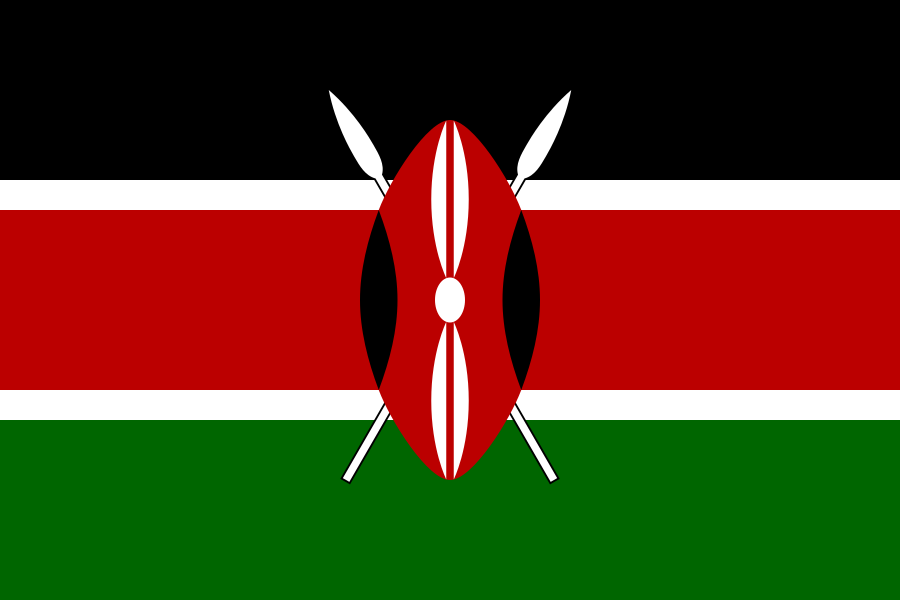
 Kenya


Quick answerKenya is a country in Eastern Africa, with a population of 57,532,493 (2025). Its capital is Nairobi, its official languages are English and Swahili, and its currency is the Kenyan shilling (KES). It covers 580,367 square kilometres (224,081 square miles), and its time zone is Africa/Nairobi.
Kenya is an East African country on the Indian Ocean, home to about 58 million people. Its capital is Nairobi, its official languages are Swahili and English, and its currency is the Kenyan shilling.
Key facts
| Capital | Nairobi |
|---|---|
| Population | 57,532,493 (2025) · 57.5 million |
| Population density | 101.1 people per km² (land area) |
| Area | 580,367 km² (224,081 sq mi) total · 569,140 km² (219,746 sq mi) land |
| Official languages | English (official), Swahili (official) |
| Currency | Kenyan shilling (KES, KSh) |
| Time zone | Africa/Nairobi |
| Government | Unitary presidential republic |
| Coastline | 536 km |
| Highest point | Mount Kenya, 5,199 m |
| Life expectancy | 63.8 years (2024) |
| Calling code | +254 |
| Driving side | Right |
| Internet domain | .ke |
Overview
Kenya is in East Africa, on the Indian Ocean, and the equator runs through the middle of the country. It covers 580,367 square kilometres, with Ethiopia to the north, Somalia to the east, South Sudan to the north-west, Uganda to the west and Tanzania to the south, and 536 kilometres of coastline. Mount Kenya, at 5,199 metres, is the second-highest mountain in Africa, and the Great Rift Valley cuts through the west of the country, holding Lake Turkana, the world's largest permanent desert lake.
About 57.5 million people lived in Kenya in 2025. Around 32 per cent of Kenyans live in towns and cities, and the median age is 19.8 years. Swahili and English are the official languages, and more than 60 other languages are spoken by more than 40 ethnic groups, including the Kikuyu, Luhya, Luo and Kalenjin. Nairobi, the capital, had 4,397,073 people in the 2019 census, and its metropolitan area is estimated at about 16 million.
Kenya's human history is among the oldest on Earth: the 1.6-million-year-old Turkana Boy fossil was found near Lake Turkana. Swahili traders worked the coast for centuries, Britain ruled the country as a colony, and Kenya became independent on 12 December 1963, a republic a year later. Nairobi began in 1899 as a railway depot and became the capital in 1907, replacing Mombasa, and the country is now a presidential republic under a 2010 constitution.
Kenya is the home of the safari — the word means journey in Swahili. Every year around 1.5 million wildebeest cross the Mara River in the Great Migration between the Maasai Mara and the Serengeti, and Nairobi National Park is the only national park inside a capital city in the world. Kenya is also the world's largest exporter of black tea, and tourism, tea and flowers drive an economy that serves as East Africa's financial hub.
Notable facts
- Kenya had 57,532,493 people in 2025, according to the World Bank.
- Nairobi is the only capital city in the world with a national park inside its boundaries: Nairobi National Park, home to lions, rhinos and giraffes against the city skyline.
- Kenya is the world's largest exporter of black tea.
- Every year, around 1.5 million wildebeest cross the Mara River in the Great Migration, moving between the Maasai Mara and Tanzania's Serengeti.
- Mount Kenya, at 5,199 metres, is the second-highest mountain in Africa, after Kilimanjaro, and the equator passes through the mountain.
How Kenya compares
Comparison table — Kenya next to 3 similar countries (neighbours first, then the same subregion).
| Country | Population | Area | Density | Capital |
|---|---|---|---|---|
| Kenya ★ | 57,532,493 (2025) | 580,367 km² | 101.1 people per km² | Nairobi |
| Ethiopia | 135,472,051 (2025) | 1,104,300 km² | 123.5 people per km² | Addis Ababa |
| Uganda | 45,905,417 (2024) | 241,038 km² | 232.9 people per km² | Kampala |
| Algeria | 47,435,312 (2025) | 2,381,741 km² | 19.9 people per km² | Algiers |
Cities in Kenya
- Nairobi Known for Nairobi National Park
- Mombasa Known for Fort Jesus
- Nakuru Known for Lake Nakuru flamingos
- Kisumu Known for Lake Victoria
Frequently asked questions
What is the capital of Kenya?
The capital of Kenya is Nairobi. It is also the country's largest city, with 4,397,073 people in the 2019 census and about 5.6 million in a 2026 estimate. Nairobi is the financial hub of East Africa and is known for its national park, the only one inside a capital city anywhere in the world.
What is the population of Kenya?
Kenya had 57,532,493 people in 2025, according to the World Bank. About 32 per cent of Kenyans live in towns and cities, and the median age is 19.8 years. Most people live in the highlands of the west and centre, around Nairobi, Mount Kenya and Lake Victoria.
What language is spoken in Kenya?
Kenya has two official languages: Swahili and English. Swahili is the national language and is spoken across the country, while English is the language of government and schools. More than 60 other languages are spoken, including Kikuyu, Luhya, Luo and Kalenjin.
What currency is used in Kenya?
Kenya uses the Kenyan shilling (KES, symbol KSh). Banknotes come in denominations up to 1,000 shillings, and mobile money, above all M-Pesa, is used everywhere, even in small market stalls. Cards work in hotels and larger shops, but carry some cash outside Nairobi.
Where is Kenya?
Kenya is in East Africa, on the Indian Ocean, and the equator runs through the middle of the country. It borders Ethiopia to the north, Somalia to the east, South Sudan to the north-west, Uganda to the west and Tanzania to the south. The country covers 580,367 square kilometres.
What time zone is Kenya in?
Kenya uses a single time zone, East Africa Time (UTC+3), across the whole country. The IANA time zone name is Africa/Nairobi. There is no daylight saving time, so the clocks stay the same all year, from Nairobi in the highlands to Mombasa on the coast.
Quick quiz
Three questions from the facts on this page. No sign-up, no score is saved.
Keep exploring
- Nairobi — capital of Kenya
- Mombasa — city in Kenya
- Nakuru — city in Kenya
- Kisumu — city in Kenya
- Ethiopia — neighbouring country
- Somalia — neighbouring country (page coming soon)
- South-sudan — neighbouring country (page coming soon)
- Tanzania — neighbouring country (page coming soon)
- Uganda — neighbouring country
- All countries — the full list
Sources & last updated
- Wikipedia — Kenya
- World Bank, World Development Indicators
- Wikipedia — List of countries and dependencies by length of coastline
- Wikipedia — List of countries and dependencies by area
- Wikipedia — Nairobi
- Kenya National Bureau of Statistics — 2019 Kenya Population and Housing Census
Last updated: . Figures are shown with their year; where sources disagree, the value is left out rather than estimated.